9 Kitchen Changes That Make Better Choices Easier When You Are Always Hungry
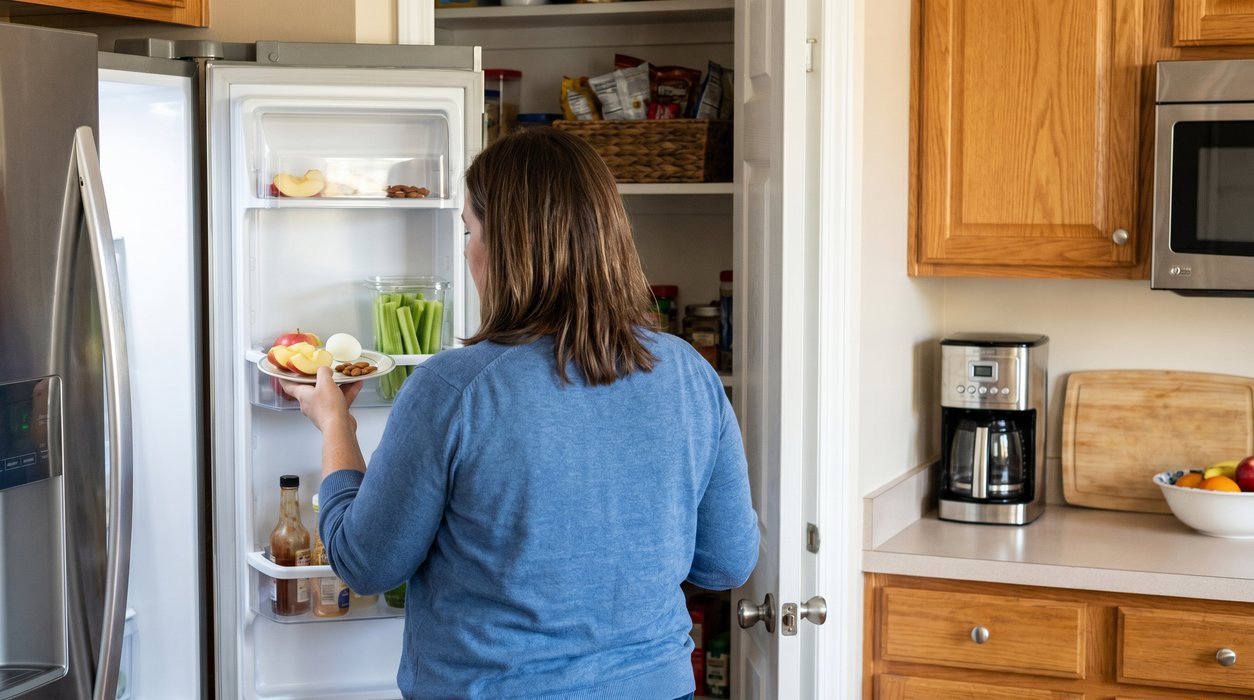
Standing in the kitchen when hunger is loud can make every choice feel urgent. This may not be random, and it does not mean discipline is missing. The encouraging news: a practical kitchen setup for weight loss can make the next supportive choice easier to see, reach, and repeat.
The goal is not a perfect kitchen or a list of banned foods. It is a calmer space that supports steadier meals, fewer impulse snacks, and more consistent nourishment on ordinary busy days.
Quick Win: Today, place one ready-to-eat protein option and one washed fruit or vegetable at eye level in the fridge so the easiest snack takes less than 30 seconds to choose.
What kitchen setup for weight loss helps when hunger is high?
The most helpful kitchen setup for weight loss reduces friction around balanced meals. Keep filling foods visible, make protein and fiber easy to grab, organize the fridge by meal components, use smaller serving tools, and create a planned snack station.
These changes may support weight management because they shape the default choice. Research on automatic eating behavior suggests that visibility, portion size, and ease of access can influence intake, especially when people are tired, hungry, or distracted.[1]
Many people notice the first benefits within a week: less frantic snacking, fewer “nothing sounds good” moments, and easier meal assembly. Weight-related changes vary and depend on food patterns, movement, sleep, stress, health conditions, and medications.
Why does the kitchen environment matter?
Hunger changes priorities. When the body wants food now, convenience often beats intention.
This is especially true for adults managing long workdays, poor sleep, stress, insulin resistance, or prediabetes. In those moments, the fastest visible option often wins before a thoughtful plan has time to appear.
Healthy eating guidance emphasizes vegetables, fruits, protein foods, whole grains, healthy fats, and lower intake of added sugars, sodium, and saturated fats.[2] A supportive kitchen turns that guidance into something reachable.
| Kitchen Change | Why It Helps |
|---|---|
| Move balanced foods to eye level | Reduces the effort needed to choose them first. |
| Prep protein and fiber | May support fullness and steadier appetite between meals. |
| Use smaller bowls and serving spoons | Makes portion awareness easier without rigid tracking. |
| Create a snack station | Turns snacking into a planned choice instead of a pantry search. |
1. Put supportive foods in the first line of sight
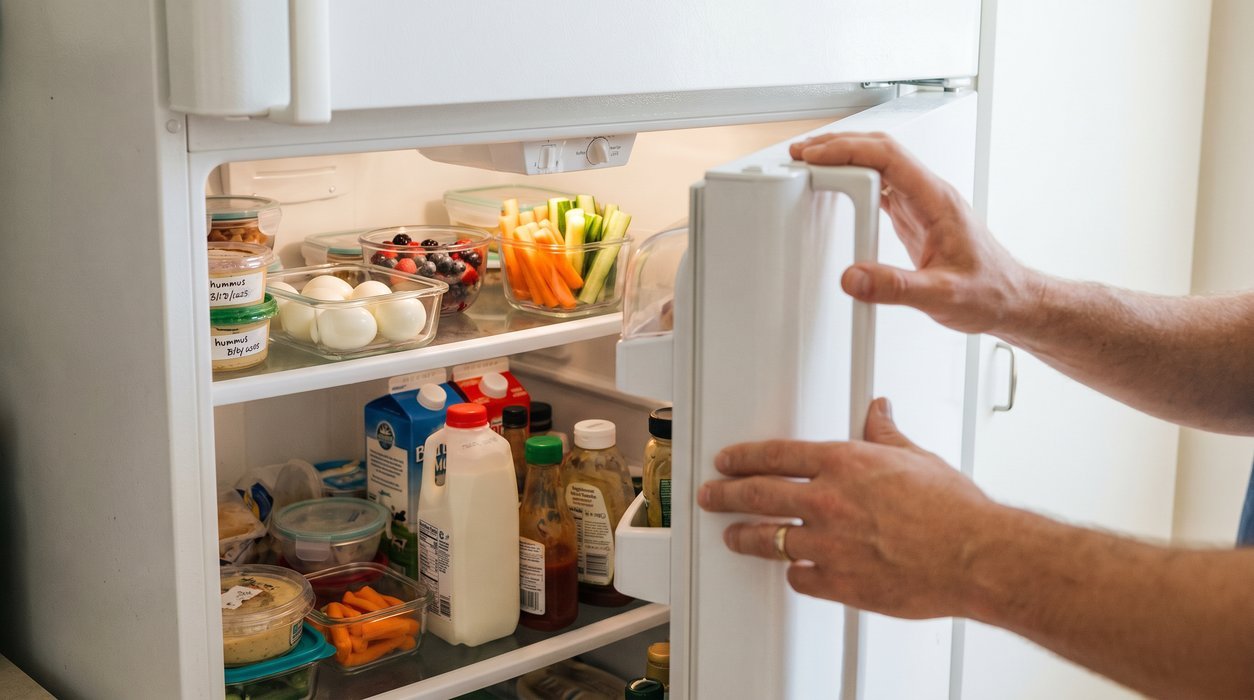
Make the foods you want to choose more often the easiest to see. Place washed fruit, cut vegetables, boiled eggs, plain yogurt, cottage cheese, hummus, tofu, or useful leftovers at eye level.
Move less filling snack foods away from the first line of sight. A high shelf, opaque container, or pantry cabinet can create a small pause before eating.
The point is not to label foods as “good” or “bad.” The point is to stop asking a hungry brain to make a careful decision while staring at the most immediately rewarding option.
Try a first-look shelf
Choose one fridge shelf for foods that can become a quick snack or small meal. Include one protein, one high-fiber carbohydrate, and one fruit or vegetable.
Simple pairs include yogurt with berries, turkey slices with cucumber, edamame with fruit, or hummus with carrots. These combinations can feel more satisfying than a single snack food alone.
2. Keep protein and fiber ready before hunger peaks
Protein and fiber are helpful because they can make meals feel more satisfying and may support steadier energy after eating.[3] This is where kitchen structure matters most.
The more assembly a balanced meal requires, the less likely it is to happen during strong hunger. This is not a personal failure; it is a predictable response to low energy and high urgency.
Useful staples include beans, lentils, tuna, eggs, plain yogurt, tofu, tempeh, prewashed greens, frozen vegetables, oats, chia seeds, and fruit. Choose options that match your preferences, budget, culture, and medical needs.
Build two-minute combinations
Instead of relying on single snack foods, set up quick pairs. Apple with peanut butter, eggs with fruit, yogurt with seeds, or beans with salsa can feel more complete than crackers alone.
For blood sugar balance, many adults do better when carbohydrates are paired with protein, fat, or fiber. Individual responses vary, especially for anyone managing diabetes or using glucose-lowering medication.
3. Organize the fridge by meal components
Organize the fridge by what foods do in a meal, not by random open space. Create zones for proteins, vegetables, high-fiber carbohydrates, sauces, and ready-to-eat leftovers.
This makes a plate-style approach easier to use: non-starchy vegetables, protein, and quality carbohydrates can be combined without complicated measuring.[4]
Clear containers work well for foods you want to remember. Cooked vegetables, rice, beans, roasted chicken, tofu, chopped salad ingredients, and fruit are more useful when they do not disappear behind jars.
One thing worth pushing back on here: many weight loss tips make hunger sound like a willpower problem. Often, it is a timing, meal composition, sleep, stress, or environment problem. That matters because a better kitchen can reduce pressure without making eating feel like a daily test.
4. Use portion tools without turning meals into math
Portion size can influence energy intake, and larger servings may lead people to eat more without noticing.[5] Gentle tools can help without requiring calorie counting.
Start with a consistent plate size, smaller snack bowls, and serving spoons that make portions easier to see. The ADA plate method also suggests a plate around nine inches across for meal building.[4]
Do not pre-portion everything. Start with foods that tend to disappear quickly, such as chips, nuts, granola, crackers, sweets, or trail mix.
Plate it before eating
Put a portion into a bowl, sit down, and eat it intentionally. This keeps enjoyable foods in the kitchen without turning the bag or box into the serving dish.
For some readers, this may pair well with learning why not eating enough protein can make snack decisions feel harder later in the day.
5. Create a planned snack station
Hunger between meals is not a failure; it is information. A snack station gives that hunger a better path.
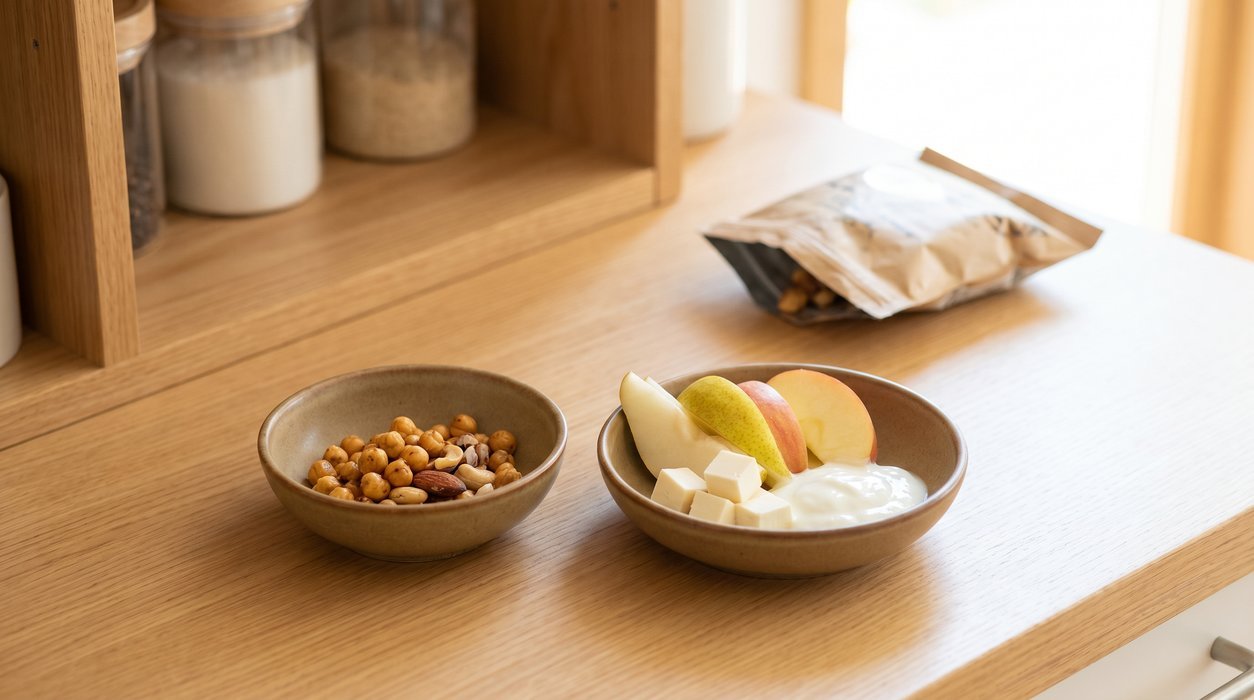
Stock it with options that combine protein, fiber, and enough satisfaction to prevent a second or third search through the pantry. The American Heart Association suggests options such as yogurt with fruit, whole-grain crackers with tuna, and toast with nut butter.[6]
Good choices may include roasted chickpeas, fruit, nuts in small containers, yogurt, cheese sticks, whole-grain crackers, hummus cups, boiled eggs, or vegetables with dip. For more ideas, use metabolic-friendly snacks as a next-step reference.
Separate snacks from emergency food
Snacks are planned support. Emergency food is what gets eaten when meals are too delayed.
Keep one or two backup options available for intense hunger, such as frozen soup, canned beans, a balanced frozen meal, or a ready protein with microwavable vegetables. This protects the next choice when the day goes sideways.
6. Prep flexible ingredients, not perfect meals
Many people do not need a refrigerator full of identical containers. They need dinner to feel possible at 7 p.m.
Meal planning has been associated with better diet quality and food variety, although these studies cannot prove cause and effect.[7] The most useful prep removes the first obstacle.
Wash greens, cook one protein, prepare one grain or bean, chop vegetables, and keep two sauces ready. With those pieces, bowls, wraps, omelets, salads, and quick plates become easier.
Use one base for two meals
Cook one flexible base that can become two different meals. Lentils can become soup one day and a salad topping the next.
Roasted vegetables can go into eggs, grain bowls, wraps, or pasta. This reduces decision fatigue without making food feel repetitive.
7. Store tempting foods with intention
Enjoyable foods can fit into a healthy eating pattern, but their placement matters when appetite is high. If a food is hard to stop eating when it is visible, move it out of sight.
Use opaque containers, a higher shelf, or single-serving storage. For some people, keeping certain foods at home less often reduces stress; for others, planned portions prevent the feeling of scarcity.
Create a pause point
A pause point is a small step between wanting and eating. It might be a closed container, a cabinet door, or the habit of plating food before sitting down.
This short delay can help adults ask, “Am I hungry, tired, stressed, or needing a real meal?” The answer does not have to be perfect to be useful.
8. Make lower-sugar drinks easier to choose
Calories from beverages can add up quickly because drinks often feel less filling than solid food. Make water, sparkling water, unsweetened tea, or other lower-sugar options easier to choose.
Keep preferred unsweetened drinks visible in the fridge. Store sugar-sweetened drinks less prominently if they are easy to drink without noticing.
This change may also support blood sugar balance for people who are sensitive to sweetened beverages. Anyone with diabetes or another medical condition should follow personalized guidance from a qualified clinician.
9. Make one eating space feel calm
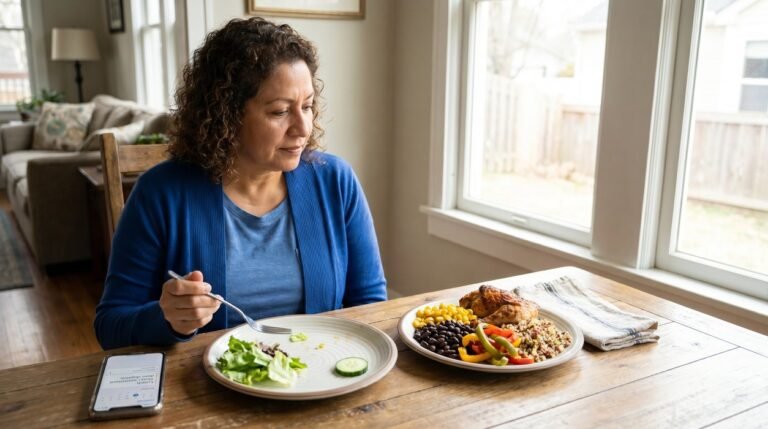
Make one place in the kitchen or dining area feel like the place for eating. Distraction can make it harder to notice fullness, satisfaction, and the difference between hunger and habit.
Clear one seat, remove clutter from a small area, and keep screens away for the first few minutes of eating when possible. This does not need to be formal.
Before eating, look at the plate and ask whether it includes protein, fiber-rich plants, and enough food to feel satisfied. If the meal is mostly snack foods, add one supportive item rather than starting over.
What changes should you notice?
Helpful kitchen changes often feel small at first. Many people notice less frantic snacking, fewer “nothing sounds good” moments, and an easier time building meals within the first week.
Over several weeks, early signs may include more consistent grocery use, fewer skipped meals, steadier afternoon energy, and less reliance on takeout when tired. Weight-related changes vary and are not a simple measure of effort.
Track behaviors before outcomes. Examples include “ate protein at breakfast,” “used the snack station,” “plated snacks,” or “packed leftovers.”
Seven-day kitchen reset
A seven-day reset works best when it is realistic. Choose one small change per day instead of reorganizing every cabinet at once.
- Day 1: Clear one eye-level fridge shelf for ready-to-eat balanced foods.
- Day 2: Add two low-prep protein options.
- Day 3: Wash or chop one fruit and one vegetable.
- Day 4: Move easy-to-overeat foods into opaque containers or a less visible cabinet.
- Day 5: Create a snack station with three balanced options.
- Day 6: Cook one flexible ingredient, such as beans, chicken, tofu, eggs, rice, or roasted vegetables.
- Day 7: Set up one calm eating spot and keep it clear for meals.
This plan is not meant to be strict. Swap days, repeat one step, or skip anything that does not fit personal needs.
Frequently Asked Questions
What is the best kitchen setup for weight loss when you are always hungry?
The best kitchen setup for weight loss makes balanced food easy to choose quickly. Keep protein, fiber-rich foods, fruits, vegetables, and planned snacks visible and ready. Store less filling snack foods out of direct sight, use smaller bowls for portions, and create a calm eating space. This approach may support better consistency without relying on constant willpower.
Should I remove all snack foods from my kitchen?
Not necessarily. Some people feel calmer when highly tempting foods are kept out of the house, while others do better with planned portions. A balanced approach is to keep enjoyable foods less visible and avoid eating directly from the package. The goal is a kitchen that supports steady choices, not one that creates stress or guilt.
What foods should be easiest to reach when trying to manage appetite?
Foods that combine protein, fiber, and volume are helpful for many adults. Examples include Greek-style yogurt, eggs, beans, lentils, tofu, lean meats, vegetables, fruit, oats, hummus, and nuts in smaller portions. Personal needs vary, especially for people managing diabetes, digestive conditions, or medical nutrition plans.
How long does it take for kitchen changes to affect eating habits?
Some changes may feel helpful within a few days, especially if they reduce decision fatigue. Many people notice that meals become easier to assemble when protein, vegetables, and snacks are already prepared. Changes in weight, blood sugar patterns, or energy usually take longer and depend on the full lifestyle pattern.
Conclusion
Better choices become easier when the kitchen stops working against hunger. A few shelves, containers, bowls, and ready-to-eat foods can reduce the number of decisions required when appetite is strongest.
A practical kitchen setup for weight loss is not about perfection. It is about making nourishing meals more visible, satisfying snacks more available, and impulse eating a little less automatic.
Start with one shelf, one snack station, or one balanced meal component. Small changes repeated often can become the quiet structure that supports long-term metabolic health.
Medical Disclaimer: The information provided in this article is for educational purposes only and does not constitute medical advice. Always consult a qualified healthcare provider before making changes to your diet, lifestyle, or treatment plan. TheMetabolicHub.com does not replace professional medical guidance.
References
- Cohen DA, Farley TA. Eating as an automatic behavior. Preventing Chronic Disease. 2008;5(1):A23. PMID: 18082012
- Centers for Disease Control and Prevention. Tips for Healthy Eating for a Healthy Weight. CDC
- Smethers AD, Rolls BJ. Dietary management of obesity: cornerstones of healthy eating patterns. Medical Clinics of North America. 2018;102(1):107-124. PMID: 29156179
- American Diabetes Association. What is the Diabetes Plate? American Diabetes Association
- Rolls BJ. What is the role of portion control in weight management? International Journal of Obesity. 2014;38 Suppl 1:S1-S8. PMID: 25033958
- American Heart Association. Healthy Snacking. American Heart Association
- Ducrot P, Méjean C, Aroumougame V, et al. Meal planning is associated with food variety, diet quality and body weight status in a large sample of French adults. International Journal of Behavioral Nutrition and Physical Activity. 2017;14:12. PMID: 28153017