Vitamin D and Metabolic Syndrome: What the Research Really Shows

Low energy, stubborn waist changes, rising fasting glucose, and “almost normal” lab results can feel confusing when food and exercise already seem consistent. This may not be random; the encouraging news is that vitamin D metabolic syndrome research helps explain where vitamin D fits — and where it does not.
Vitamin D Metabolic Syndrome: Can It Help Prevent Risk?
Vitamin D may support metabolic health, but it should not be viewed as a stand-alone way to prevent metabolic syndrome. Research links low vitamin D status with higher cardiometabolic risk, including insulin resistance, abdominal obesity, blood pressure concerns, and unfavorable lipid patterns.[1]
Vitamin D metabolic syndrome evidence is strongest as a risk-marker and support strategy, not as a single-cause explanation. If levels are low, improving vitamin D status may support insulin function and inflammatory balance over weeks to months.[2]
Metabolic syndrome is usually defined by a cluster of elevated waist circumference, high triglycerides, low HDL cholesterol, elevated blood pressure, and elevated fasting glucose. Having several together is linked to higher risk for type 2 diabetes, stroke, and cardiovascular disease.[3]
Key Takeaways
- Low vitamin D status is associated with higher metabolic syndrome risk, but association does not prove causation.
- Vitamin D may influence insulin sensitivity, immune regulation, muscle function, and inflammatory balance.
- Supplement trials show mixed results, especially when people are not deficient at baseline.
- Testing 25-hydroxyvitamin D is more useful than guessing from symptoms alone.
- The best results come from combining vitamin D support with nutrition, walking, resistance training, sleep, and medical care.
Quick Win: This week, add one vitamin D-rich food such as salmon, sardines, eggs, or fortified yogurt to two meals. Ask your healthcare provider whether a 25-hydroxyvitamin D test makes sense for your situation.
How Vitamin D Connects to Insulin, Inflammation, and Muscle
Vitamin D acts more like a hormone-like signaling molecule than a simple nutrient. The body converts it into active forms that interact with vitamin D receptors in immune cells, muscle, fat tissue, and pancreatic beta cells.[4]
This does not mean vitamin D controls metabolism by itself. It means vitamin D status may influence several systems that shape glucose handling, fat storage, inflammation, and vascular function.
Mechanism Box: Vitamin D may support metabolic health through vitamin D receptor signaling, calcium handling in cells, pancreatic beta-cell function, immune regulation, muscle performance, and inflammatory balance.
These pathways overlap with insulin resistance, but they do not replace the core drivers of metabolic health.
Vitamin D and insulin resistance
Insulin resistance happens when cells become less responsive to insulin’s signal. The pancreas may compensate by producing more insulin, which can keep glucose normal for a while but may add strain over time.
Vitamin D may support insulin sensitivity through effects on calcium handling, beta-cell function, inflammation, and gene expression related to glucose metabolism.[4]
Observational studies often find that lower vitamin D levels are linked to higher insulin resistance or higher diabetes risk. Still, supplementation studies do not show the same benefit for every person.[2]
This is not a personal failure. Many people discover insulin resistance only after years of vague symptoms, “borderline” labs, or changes that feel out of proportion to their habits.
If waist changes and glucose numbers feel stubborn, the issue may be broader than calories alone. Understanding why fat loss can feel harder can make the vitamin D conversation more realistic and less blame-based.
Vitamin D and chronic low-grade inflammation
Metabolic syndrome is often accompanied by low-grade inflammation. This is not the same as an acute infection; it is a slower immune pattern shaped by visceral fat, sleep, inactivity, nutrient status, and stress.
Vitamin D is involved in immune regulation. Adequate status may help the immune system respond appropriately rather than staying chronically activated, although results vary by baseline status and study design.[5]
Vitamin D and body composition
Higher body fat is often linked with lower measured vitamin D levels. One reason is that vitamin D is fat-soluble, so it can be distributed into fat tissue and appear lower in circulation.[6]
One thing worth pushing back on here: vitamin D is sometimes framed as a “fat loss vitamin.” That is too simplistic; a more accurate view is that vitamin D may support metabolic systems only when the larger plan is in place.
That larger plan usually includes protein, fiber-rich carbohydrates, resistance training, sleep regularity, and medical care when needed. Vitamin D metabolic syndrome support works best inside that bigger pattern.

What the Research Shows — and What It Does Not
The strongest evidence shows a consistent association between low vitamin D status and higher metabolic syndrome risk. This does not prove that low vitamin D directly causes metabolic syndrome.[1]
People with lower vitamin D may also have less outdoor time, higher body fat, different dietary patterns, lower physical activity, or other health conditions. These factors can overlap with insulin resistance and cardiometabolic risk.
Supplement trials add another layer. In the D2d trial, vitamin D supplementation did not significantly reduce type 2 diabetes risk in the overall high-risk population.[2]
That result does not mean vitamin D status is irrelevant. It means broad supplementation is different from correcting a low level in a person with a specific clinical context.
Supplement trials in adults with metabolic syndrome remain mixed. A meta-analysis found possible improvements in insulin resistance and blood pressure, but not consistent benefits for blood lipids or HbA1c.[7]
The practical takeaway is cautious but useful. Vitamin D may support metabolic health, but it should not be framed as a shortcut, cure, or replacement for the foundations that improve insulin sensitivity.
Who Is More Likely to Have Low Vitamin D?
Vitamin D status varies widely between people. Sun exposure, skin pigmentation, latitude, season, age, clothing coverage, sunscreen use, digestive health, body composition, and diet can all influence levels.
People who spend most days indoors, live farther from the equator, work night shifts, or cover most skin outdoors may be more likely to have low vitamin D. Adults with obesity, malabsorption conditions, kidney disease, or certain medications may need closer monitoring.[6]
| Factor | Why It Matters for Vitamin D and Metabolic Health |
|---|---|
| Limited sunlight | May reduce skin-based vitamin D production, especially in winter or northern climates. |
| Higher body fat | May be associated with lower circulating vitamin D and higher insulin resistance risk. |
| Low intake of vitamin D foods | May make it harder to maintain adequate levels when sun exposure is low. |
| Poor sleep or shift work | May affect glucose regulation, appetite rhythms, and daily outdoor exposure. |
| Prediabetes or insulin resistance | May signal a need to evaluate nutrient, movement, sleep, and lifestyle patterns together. |
Testing can be helpful because symptoms of low vitamin D are often vague or absent. A healthcare provider can interpret 25-hydroxyvitamin D alongside calcium, kidney function, medications, and overall health context.[6]
Food, Sunlight, and Supplements: What Works Best?
The best approach depends on baseline vitamin D status, skin type, climate, season, diet, and medical history. Most adults benefit from thinking in three layers: sensible sunlight, vitamin D-rich foods, and supplementation when appropriate.
Sensible sunlight
Sunlight helps the skin produce vitamin D when UVB rays are strong enough. This varies by latitude, season, time of day, cloud cover, air pollution, and skin pigmentation.
For some people, brief non-burning midday exposure may help support levels. For others, especially during winter or with higher skin cancer risk, sunlight alone may not be enough or may not be advisable.
Sunburn should always be avoided. People with a history of skin cancer, photosensitive conditions, or medications that increase sun sensitivity should follow medical guidance.
Vitamin D foods
Few foods naturally contain meaningful vitamin D. Fatty fish such as salmon, sardines, trout, and mackerel are among the better sources.[6]
Egg yolks, liver, and UV-exposed mushrooms can contribute smaller amounts. Fortified foods such as milk, plant milks, yogurt, and cereals may also help, depending on the product and region.
Food alone may not raise low vitamin D levels quickly. Still, it strengthens the foundation and often brings protein, omega-3 fats, calcium, magnesium, and potassium into the same weekly rhythm.
Supplementation when appropriate
Vitamin D supplements can be useful when levels are low or when sun and food intake are insufficient. The right dose depends on blood levels, body size, health status, medications, and clinician guidance.
More is not always better. Excessive vitamin D can raise calcium too high and may cause health problems, so high-dose supplementation should be supervised.[6]
For vitamin D metabolic syndrome support, the practical goal is not to chase the highest possible number. It is to reach an appropriate range while improving the daily behaviors that shape insulin sensitivity.
Vitamin D Testing: What to Ask Your Healthcare Provider
Vitamin D status is usually assessed with a 25-hydroxyvitamin D blood test. This marker reflects vitamin D from food, supplements, and skin production.[6]
A test can be especially useful when there is low sun exposure, obesity, malabsorption, kidney disease, bone health concerns, or repeated fatigue without a clear explanation. It may also help guide safe dosing.
It is reasonable to ask how often to retest after changing intake. Many clinicians recheck after a few months, especially when correcting a low level or using a higher-dose plan.
Vitamin D should not be interpreted alone. Calcium levels, kidney function, medications, diet pattern, and overall metabolic risk all matter when deciding what to do next.
What Changes Can You Realistically Track?
Vitamin D status does not usually change how a person feels overnight. Meaningful changes often require weeks to months, especially when deficiency, winter sunlight, body composition, or inconsistent supplementation are involved.
Many people track vitamin D with a blood test rather than symptoms alone. A follow-up test after a clinician-recommended plan can show whether food, sunlight, or supplementation is moving levels in the intended direction.
Useful marker: Serum 25-hydroxyvitamin D is the main blood marker used to assess vitamin D status.
It should be interpreted with medical context rather than treated as a stand-alone score.[6]
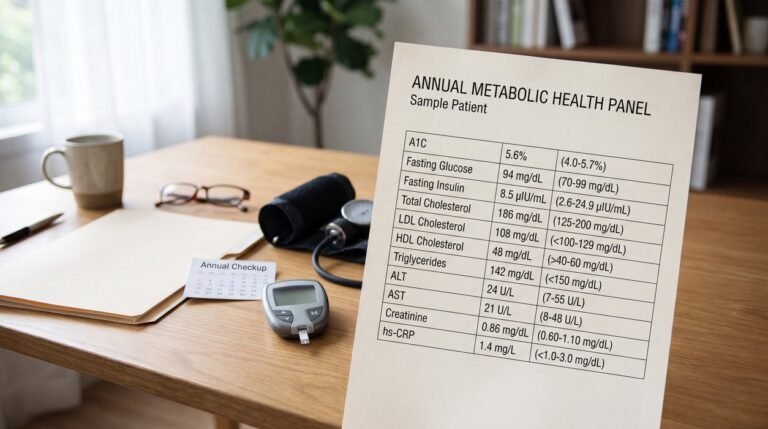
Metabolic progress can be tracked separately. Useful markers may include fasting glucose, A1C, fasting insulin when available, triglycerides, HDL cholesterol, blood pressure, waist circumference, energy stability, and post-meal sleepiness.
Early signs often include steadier energy, fewer intense afternoon crashes, improved exercise tolerance, or better consistency with healthy routines. These signs do not prove vitamin D is the only reason, but they can help people notice patterns.
A Practical Vitamin D Metabolic Syndrome Plan
A prevention-focused plan should be simple enough to follow. The goal is to support vitamin D status while addressing glucose control, waist circumference, blood pressure, triglycerides, HDL cholesterol, and inflammation.
- Check your baseline when possible. Ask a healthcare provider whether a 25-hydroxyvitamin D test makes sense, especially with prediabetes, obesity, low sun exposure, or bone health concerns.
- Build a weekly food rhythm. Include fatty fish once or twice weekly if tolerated, choose fortified foods when useful, and pair meals with protein and fiber.
- Use sunlight carefully. Aim for short, non-burning outdoor exposure when appropriate, while respecting skin cancer risk, medications, climate, and medical guidance.
- Consider supplements thoughtfully. Use supplements based on blood levels and clinician advice rather than guessing with high doses.
- Strengthen insulin sensitivity habits. Add resistance training, daily walking, sleep regularity, and minimally processed meals because vitamin D works within this larger system.
A realistic timeframe is usually measured in weeks and months. Vitamin D levels may respond within a few months when intake is consistent, while metabolic markers often need ongoing changes in movement, nutrition, sleep, and body composition.
Many people notice the earliest practical changes in daily energy, post-meal sleepiness, or routine consistency. Lab markers such as A1C usually require a longer window because they reflect a multi-week average.
For anyone managing prediabetes or metabolic syndrome risk, pairing vitamin D support with simple blood sugar habits can be especially practical. Even a short walk after a carb-containing meal may help the body use glucose more efficiently.

Common Mistakes With Vitamin D Supplements
The first mistake is assuming more is always better. Vitamin D is fat-soluble, and excessive intake can raise calcium too high, especially with high-dose supplements used without monitoring.[6]
The second mistake is using supplements to replace the bigger metabolic plan. Vitamin D cannot substitute for movement, protein, fiber, sleep, blood pressure care, or glucose monitoring when those are needed.
The third mistake is expecting symptoms to confirm status. Low vitamin D can be quiet, and fatigue or muscle aches can have many causes.
The fourth mistake is ignoring context. A person with low sun exposure, obesity, digestive issues, or certain medications may need a different plan than someone whose levels are already sufficient.
Frequently Asked Questions
Can vitamin D metabolic syndrome support help prevent metabolic syndrome?
Vitamin D metabolic syndrome support may help address risk patterns that overlap with insulin resistance, inflammation, and body composition, especially when vitamin D status is low. Research links low vitamin D with higher cardiometabolic risk, but supplementation is not a stand-alone prevention strategy. The strongest approach combines appropriate vitamin D status with movement, nutrient-dense meals, sleep, and medical follow-up.
What vitamin D level is best for metabolic health?
There is not one perfect vitamin D number for every adult. Most clinicians assess vitamin D using a 25-hydroxyvitamin D blood test and interpret it alongside health history, calcium status, kidney function, and risk factors. People should avoid self-prescribing high doses because excessive vitamin D can cause harm.
Can vitamin D improve insulin resistance?
Vitamin D may support insulin sensitivity, particularly in people who are low or deficient. Studies do not show that vitamin D alone reliably changes insulin resistance for everyone. It works best as part of a broader plan that includes resistance training, walking, adequate protein, fiber-rich carbohydrates, and sleep consistency.
Is sunlight better than a vitamin D supplement?
Sunlight can support vitamin D production, but it is not always reliable or appropriate. Season, latitude, skin pigmentation, clothing, sunscreen, work schedule, and skin cancer risk all matter. Supplements may be helpful when levels are low or sunlight exposure is limited, but dosing should be guided by a healthcare provider.
Which foods are good sources of vitamin D?
Fatty fish such as salmon, sardines, trout, and mackerel are among the best natural food sources of vitamin D. Egg yolks, liver, and UV-exposed mushrooms may contribute smaller amounts. Fortified milk, fortified plant milks, yogurt, and cereals can also help, depending on the product.
Conclusion
Vitamin D is not a magic shield against metabolic syndrome, but it may be a meaningful part of prevention when levels are low. Its role touches insulin sensitivity, inflammation, muscle function, and the wider cardiometabolic environment.
The smartest approach is measured and practical: check status when appropriate, improve food and sunlight habits, supplement thoughtfully if needed, and keep the larger metabolic habits in place.
Vitamin D metabolic syndrome support works best as part of a steady foundation, not as a shortcut. For many adults, that foundation begins with a blood test, a better weekly routine, and small choices repeated long enough to matter.
Medical Disclaimer: The information provided in this article is for educational purposes only and does not constitute medical advice. Always consult a qualified healthcare provider before making changes to your diet, lifestyle, or treatment plan. TheMetabolicHub.com does not replace professional medical guidance.
References
- Hajhashemy Z, Shahdadian F, Ziaei R, et al. Serum vitamin D levels in relation to metabolic syndrome: a systematic review and dose-response meta-analysis of epidemiologic studies. Obesity Reviews. 2021. PMID: 33829636
- Pittas AG, Dawson-Hughes B, Sheehan P, et al. Vitamin D Supplementation and Prevention of Type 2 Diabetes. New England Journal of Medicine. 2019. PMID: 31173679
- National Heart, Lung, and Blood Institute. Metabolic Syndrome. NHLBI
- Szymczak-Pajor I, Śliwińska A. Analysis of Association between Vitamin D Deficiency and Insulin Resistance. Nutrients. 2019. PMID: 30959886
- Charoenngam N, Holick MF. Immunologic Effects of Vitamin D on Human Health and Disease. Nutrients. 2020. PMID: 32679784
- National Institutes of Health Office of Dietary Supplements. Vitamin D Fact Sheet for Health Professionals. NIH ODS
- Qi KJ, Zhao ZT, Zhang W, Yang F. The impacts of vitamin D supplementation in adults with metabolic syndrome: A systematic review and meta-analysis of randomized controlled trials. Frontiers in Pharmacology. 2022. PMID: 36278155