An Evening Routine for Better Morning Blood Sugar
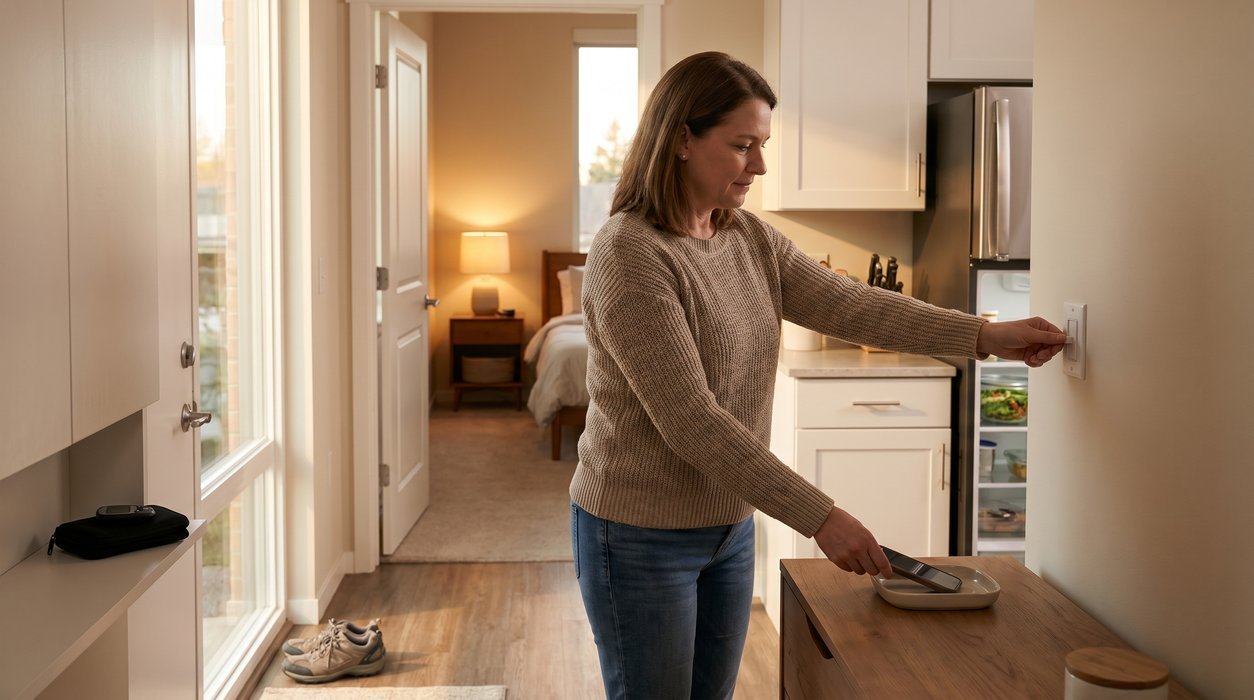
Waking up to a higher-than-expected glucose reading can feel frustrating, especially when the day before seemed reasonable. Dinner was balanced enough, the evening felt calm, and still the morning number does not match the effort.
This may not be random. The encouraging news: an evening routine for better morning blood sugar can give digestion, insulin signaling, stress hormones, and sleep a steadier overnight rhythm.
An Evening Routine for Better Morning Blood Sugar: What Helps Most?
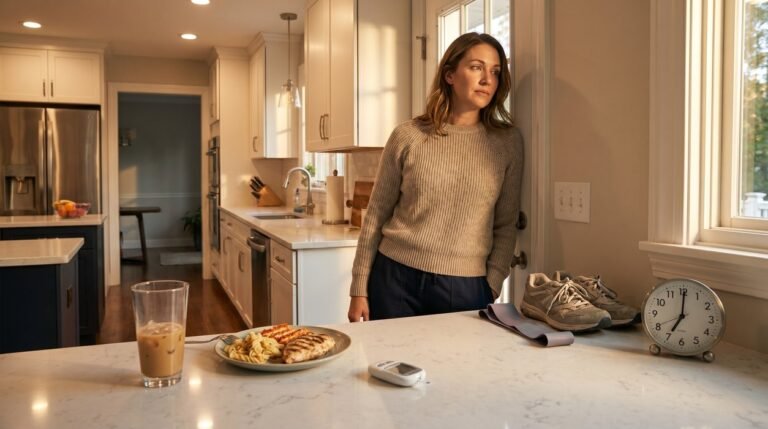
An evening routine for better morning blood sugar usually works best when it combines an earlier dinner, a balanced plate, light movement after eating, and a calmer wind-down before bed. These habits may reduce the size of the dinner glucose rise and make overnight patterns easier to interpret.
Many people notice early clues within one to two weeks, such as fewer large post-dinner spikes, steadier morning energy, or a more predictable fasting glucose pattern. This is not a personal failure; morning glucose is shaped by hormones, sleep, medication timing, stress, alcohol, and the previous evening.
Quick Win: Finish dinner 2–3 hours before bed when possible, then take a gentle 10–15 minute walk within an hour after eating.
Key Takeaways
- Morning blood sugar is influenced by dinner timing, meal composition, stress, sleep, medication timing, alcohol, and early-morning hormones.
- Finishing dinner 2–3 hours before bed may give the body more time for digestion and glucose clearance.
- A short post-dinner walk can help muscles use glucose during the period when blood sugar is rising after a meal.
- Sleep quality matters because poor sleep may affect insulin sensitivity, appetite signals, and stress hormone patterns.
- Persistent morning highs, suspected overnight lows, or medication questions should be discussed with a qualified healthcare provider.
Why Can Blood Sugar Be Higher in the Morning?
Blood sugar can rise before breakfast because the body naturally releases wake-up hormones in the early morning. Cortisol, glucagon, growth hormone, and adrenaline can signal the liver to release glucose into the bloodstream.
In metabolically healthy adults, insulin usually helps keep that rise controlled. In people with insulin resistance, prediabetes, or diabetes, the same hormone pattern may lead to a more noticeable fasting glucose increase.
The American Diabetes Association describes two common reasons for high morning glucose: the dawn phenomenon and waning insulin. A rarer cause is rebound after overnight hypoglycemia, often called the Somogyi effect.[1]
The dawn phenomenon refers to early-morning hyperglycemia that is not preceded by an overnight low. That distinction matters because the right response may differ depending on whether glucose rose gradually, medication wore off, or a low happened during sleep.[2]
Why the previous evening matters
Evening habits influence the starting point before early-morning hormones begin to rise. A late, heavy dinner may keep glucose elevated into the night, while poor sleep can make insulin sensitivity less predictable.
Randomized crossover research in healthy volunteers suggests that eating dinner close to bedtime can worsen overnight glucose handling compared with an earlier dinner pattern.[3]
How Do You Build an Evening Routine That Works?
The best routine is simple enough to repeat on a normal weekday. A complicated plan may work for two nights, but glucose patterns usually respond better to consistent signals than occasional intensity.
Build the evening around four anchors: dinner timing, dinner composition, post-meal movement, and a predictable sleep wind-down.
| Evening Anchor | Practical Target | Why It May Help |
|---|---|---|
| Dinner timing | Finish 2–3 hours before bed when possible | Gives digestion and glucose clearance more time before sleep |
| Dinner composition | Protein, vegetables, fiber-rich carbs, and healthy fats | May slow glucose absorption and reduce a sharp post-meal rise |
| Post-meal movement | 10–20 minutes of easy walking or light chores | Active muscles can use glucose after dinner |
| Sleep wind-down | 30–60 minutes of lower light and lower stimulation | Supports sleep quality and may reduce stress-driven glucose release |
Start with one anchor rather than trying to change the whole evening at once. For many people, the easiest first experiment is moving dinner slightly earlier or adding a relaxed walk after eating.
For more food-order and post-meal movement ideas, the post-meal glucose strategies in this beginner guide can be a practical next step.
What Should Dinner Look Like for Steadier Overnight Glucose?
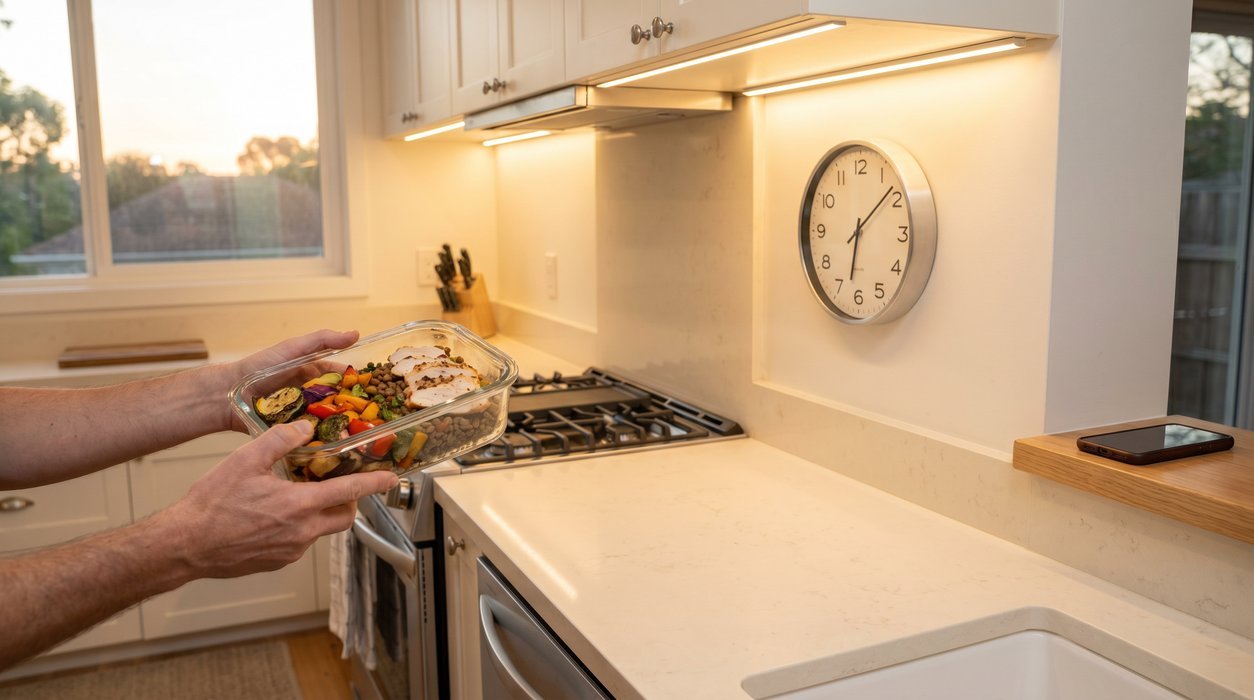
Dinner does not need to be tiny, carb-free, or joyless. A steadier dinner usually means carbohydrates are paired with protein, fiber, and fat instead of arriving alone.
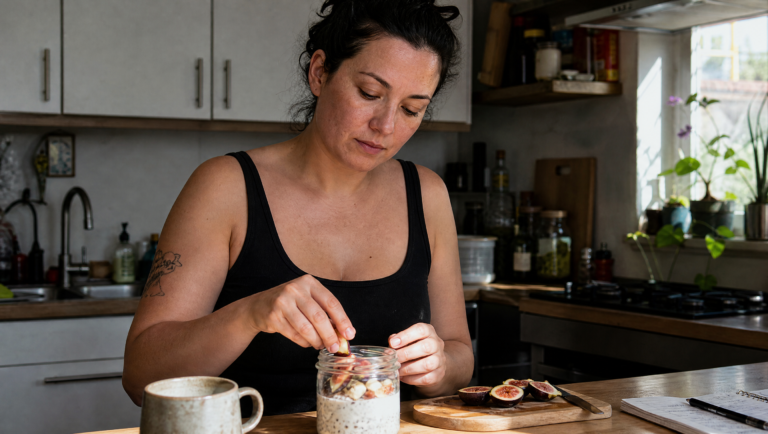
A useful plate structure is half non-starchy vegetables, one quarter protein, and one quarter high-fiber carbohydrate. Examples include salmon with lentils and greens, tofu with vegetables and brown rice, or eggs with beans and salad.
Choose carbohydrates you can measure and repeat
Carbohydrates are not “bad,” but the amount, type, and timing can change the overnight curve. Beans, lentils, intact whole grains, berries, starchy vegetables, and whole fruit usually bring more fiber than refined options.
Repeatable dinners are especially useful for anyone tracking with a glucose meter or CGM. Eating a similar meal twice, once earlier and once later, can reveal whether timing changes the next morning’s pattern.
Be cautious with bedtime snacks
A bedtime snack may help some people, especially when a clinician recommends it to prevent overnight lows. For others, late snacking simply adds another glucose rise before sleep.
If a snack is needed, a protein- and fiber-focused option is often gentler than sweets or refined carbohydrates. Examples include plain Greek yogurt with chia, cottage cheese with berries, hummus with vegetables, or a small handful of nuts.
One thing worth pushing back on here: many people assume morning glucose is only about what they ate at night. Food matters, but the body also responds to sleep debt, stress, medication timing, alcohol, illness, menstrual cycle changes, and training load. That matters because a higher reading after poor sleep may call for better sleep recovery, not stricter food rules.
How Do Movement, Stress, and Sleep Fit Together?
Post-meal movement is one of the most practical evening tools because it does not require a gym. A short walk, easy cycling, gentle mobility, or light household chores can help reduce prolonged sitting after dinner.
A 2023 systematic review and meta-analysis found that exercise after meals reduced postprandial glucose excursions, with walking soon after eating appearing especially useful for acute glucose control.[4]
Use light movement as glucose cleanup
The goal is not a hard workout before bed. A practical target is 10–15 minutes of easy walking after dinner, or light indoor movement when outdoor walking is not realistic.
Anyone using insulin, sulfonylureas, or other glucose-lowering medication should be attentive to symptoms of low blood sugar during or after activity. Meal size, medication, alcohol, and exercise can interact in ways that need individualized guidance.
Lower the stress signal before bed
Evening stress can keep the nervous system in a more alert state. When the body stays activated, sleep may become lighter and glucose regulation may feel less predictable.
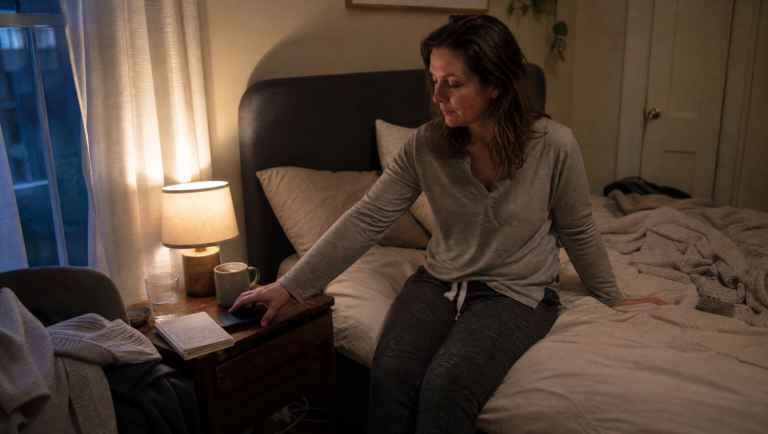
A wind-down routine can be basic: dim lights, stop work notifications, take a warm shower, stretch for five minutes, or write tomorrow’s tasks on paper. The aim is to reduce rumination, not create another performance goal.
Make sleep the final metabolic habit
Sleep is not passive downtime for metabolism. Reviews of laboratory and population research suggest that short or disrupted sleep is linked with changes in glucose tolerance, appetite hormones, insulin sensitivity, and diabetes risk.[5]
The ADA Standards of Care also include sleep-health screening for people with diabetes and those at risk for diabetes.[6] For a deeper explanation, see how sleep affects insulin sensitivity.
A Practical 7-Night Evening Blood Sugar Plan
This plan is designed to be gentle, repeatable, and easy to observe. It is not a medical protocol and should be adapted for medication use, pregnancy, eating disorder history, shift work, and individual clinical needs.
- Night 1: Record dinner time, bedtime, sleep quality, and morning glucose without changing anything.
- Night 2: Finish dinner at least two hours before bed, if your schedule allows.
- Night 3: Add a 10–15 minute relaxed walk after dinner.
- Night 4: Build dinner around protein, vegetables, and a measured high-fiber carbohydrate.
- Night 5: Skip late-night refined snacks unless medically needed, and note hunger levels.
- Night 6: Create a 30-minute wind-down with dimmer light and no work notifications.
- Night 7: Repeat the most realistic combination and compare the week’s pattern, not one isolated number.
At the end of the week, look for direction rather than perfection. A smaller dinner spike, a flatter overnight CGM curve, or a steadier fasting average may be more meaningful than one unusually good reading.
What Progress Can You Expect?
Blood sugar patterns usually change gradually, and one morning number never tells the whole story. A better signal is the average of several fasting readings or the overnight CGM curve across repeated evenings.
Early signs often include fewer large dinner spikes, less overnight variability, steadier morning energy, or fewer intense cravings after waking. Meaningful change may require more than one lever.
If the pattern worsens, becomes unpredictable, or includes suspected overnight lows, stop experimenting and seek medical guidance. Morning highs can have multiple causes, and medication-related factors should not be handled alone.
Frequently Asked Questions
Does an evening routine for better morning blood sugar really help?
An evening routine for better morning blood sugar may help by improving dinner timing, reducing prolonged sitting after meals, and supporting sleep quality. These habits can influence overnight glucose patterns when repeated consistently. The effect varies by person, and persistent morning highs should be reviewed with a healthcare provider.
What is the best time to stop eating at night for fasting glucose?
Many adults do well with finishing dinner about 2–3 hours before bed, but the best timing depends on schedule, medications, hunger, and sleep. Eating very close to bedtime may make overnight glucose harder to manage for some people. Anyone prone to overnight lows should follow individualized medical guidance instead of extending the fasting window alone.
Is walking after dinner better than exercising before dinner?
Both can be useful, but post-dinner walking directly targets the period when glucose is rising after a meal. A gentle 10–15 minute walk may be enough for many people to reduce sitting time and support muscle glucose uptake. More intense exercise is not always better at night, especially if it disrupts sleep.
Can poor sleep raise morning blood sugar?
Poor sleep may contribute to higher morning glucose by affecting insulin sensitivity, appetite hormones, and stress hormone patterns. Some people notice higher fasting readings after short, restless, or fragmented sleep. Improving sleep is not a quick fix, but it can be an important part of metabolic health.
Conclusion
Morning glucose is not a moral scorecard. It is a signal shaped by the previous evening, the night’s sleep, early-morning hormones, and individual metabolic context.
An evening routine for better morning blood sugar works best when it is calm and repeatable: earlier dinner when possible, balanced food, light movement, less late-night stimulation, and enough sleep opportunity.
Start with the smallest change that feels realistic for the next seven nights. A steadier morning often begins with a steadier evening.
Medical Disclaimer: The information provided in this article is for educational purposes only and does not constitute medical advice. Always consult a qualified healthcare provider before making changes to your diet, lifestyle, or treatment plan. TheMetabolicHub.com does not replace professional medical guidance.
References
- American Diabetes Association. High Morning Blood Glucose. ADA
- O’Neal TB, Luther EE. Dawn Phenomenon. StatPearls. 2023. NCBI Bookshelf
- Gu C, Jun JC, Brereton N, et al. Metabolic Effects of Late Dinner in Healthy Volunteers—A Randomized Crossover Clinical Trial. J Clin Endocrinol Metab. 2020. PMID: 32525525
- Engeroff T, Groneberg DA, Wilke J. After Dinner Rest a While, After Supper Walk a Mile? A Systematic Review with Meta-Analysis. Sports Med. 2023. PMID: 36715875
- Morselli L, Leproult R, Balbo M, Spiegel K. Role of Sleep Duration in the Regulation of Glucose Metabolism and Appetite. Best Pract Res Clin Endocrinol Metab. 2010. PMID: 21112019
- American Diabetes Association Professional Practice Committee. Summary of Revisions: Standards of Care in Diabetes—2026. Diabetes Care. 2026. Diabetes Care