
Daily Movement for Desk Workers: 10 Ways to Sit Less
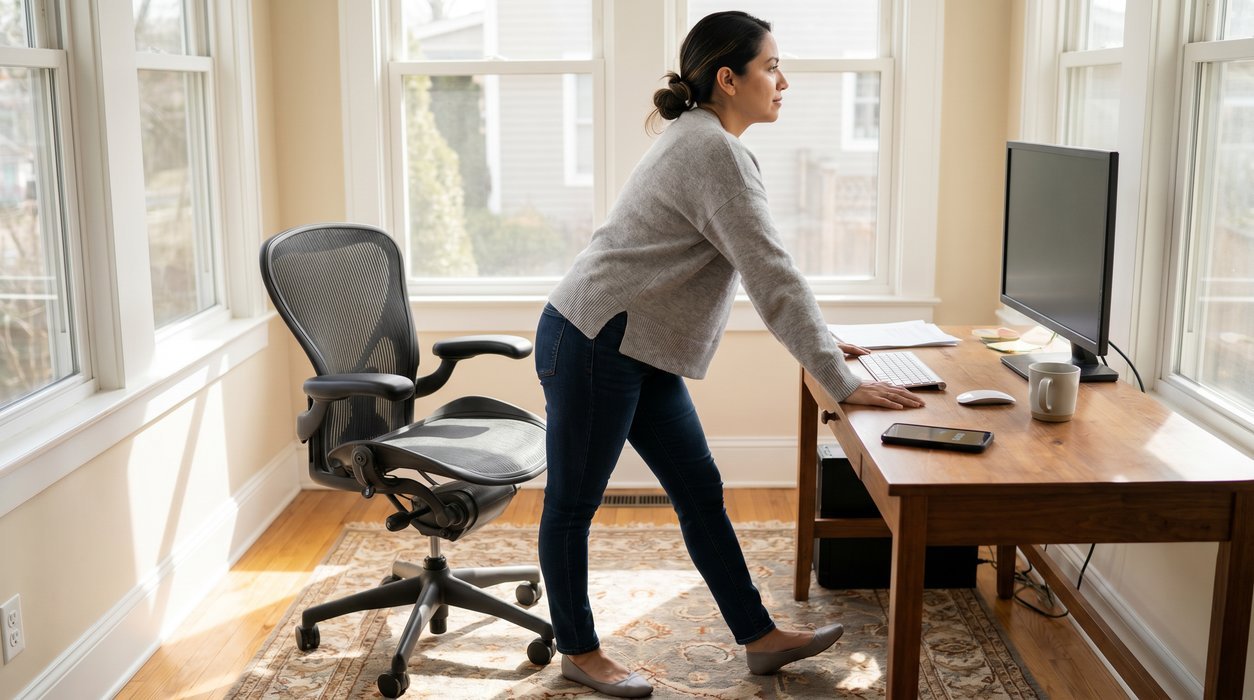
By mid-afternoon, desk work can leave the body feeling both tired and restless. Focus gets patchy, the hips feel tight, and another coffee may not solve the flat, stuck feeling.
This may not be random. The encouraging news: daily movement for desk workers does not require a dramatic fitness routine, only small movement breaks placed where sitting usually takes over.
Quick Win: Set a 30-minute reminder today. Each time it rings, stand up for one minute, walk to refill water, do 10 calf raises, or take one slow lap around your workspace.
What Is the Best Daily Movement for Desk Workers?
The best daily movement for desk workers is light, frequent movement spread across the workday. Short walking breaks, standing transitions, stair use, desk mobility, and post-meal walks can reduce long blocks of stillness without needing a full workout.
For metabolic health, the pattern matters. Randomized trials suggest that interrupting prolonged sitting with brief walking breaks may support healthier post-meal glucose and insulin responses in some adults.[1]
This is not about turning work into a fitness challenge. It is about making movement normal enough to repeat during busy weeks.
Key Takeaways
- Interrupt sitting every 30 to 60 minutes when possible.
- One to three minutes of easy movement can be enough to break a sitting streak.
- Walking after meals may help support post-meal blood sugar balance.
- Standing helps, but standing still is not the same as moving.
- The best plan is the one you can repeat on normal workdays.
Why Sitting Still Affects Energy and Metabolic Health
Sitting is not harmful because every seated moment is “bad.” The bigger issue is staying almost motionless for long blocks of time.
Large muscles help the body use glucose and circulate blood when they contract. When movement drops for hours, people may feel more stiffness, lower alertness, and heavier afternoon fatigue.
Public health guidelines encourage adults to move more, include aerobic and strengthening activity, and reduce sedentary time where possible.[4] That message is especially relevant for people whose work happens mostly at a desk.
Desk work creates a movement gap
Many people do not feel inactive because their minds are busy. Meetings, messages, deadlines, and decisions can make the day feel full.
The body may still be doing very little. A person can feel mentally exhausted while their legs, hips, back, and shoulders have barely changed position.
This is not a personal failure. Modern desk work is built around convenience, screens, and long sitting blocks, so movement has to be designed back into the day.
Exercise still matters, but it is not the whole story
Structured workouts are valuable. Brisk walking, cycling, strength training, swimming, and similar activity can support cardiovascular fitness, muscle health, and insulin sensitivity.
Still, a workout does not automatically erase eight or nine hours of near-total stillness. Sedentary time and exercise are related, but they are not identical habits.
That distinction is useful. It means there are more opportunities to support metabolic health throughout the day, even when a gym session is not realistic.
How Often Should Desk Workers Move?
A practical target is to interrupt sitting every 30 to 60 minutes. The American Diabetes Association notes that breaking up prolonged sitting at least every 30 minutes with slow walking or simple resistance movements can improve glucose metabolism.[5]
The movement does not need to be intense. One to three minutes of walking, calf raises, chair sit-to-stands, or gentle mobility can be enough to change position and wake up circulation.
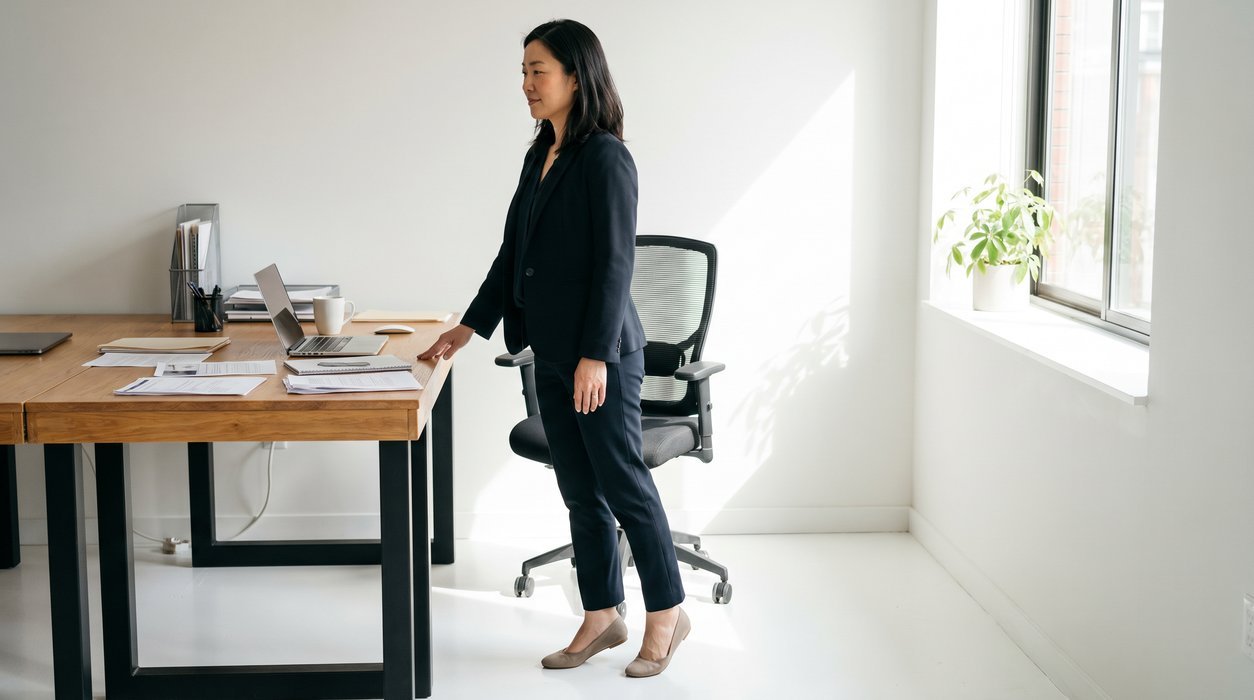
| Workday Moment | Movement Option | Why It Helps |
|---|---|---|
| Every 30–60 minutes | Stand, walk, stretch, or do calf raises for 1–3 minutes | Breaks long sitting blocks and supports circulation |
| After lunch | Take a gentle 5–10 minute walk | May support post-meal glucose handling |
| During calls | Stand, pace slowly, or shift positions | Adds movement without needing extra calendar time |
| Before ending work | Walk outside or do a short mobility routine | Creates a healthier transition away from desk mode |
10 Ways to Add More Movement to a Desk Day
Daily movement for desk workers works best when it attaches to things already happening. Meetings, meals, bathroom breaks, water refills, emails, and calendar transitions can all become movement cues.
1. Start with a five-minute movement primer
Before sitting down, spend five minutes waking up the body. Try gentle marching, shoulder rolls, hip circles, bodyweight good mornings, or a short walk outside.
This does not need to count as a workout. It simply tells the body that the day will not begin with immediate stillness.
2. Use a 30-minute sitting interruption rule
Set a timer, smartwatch reminder, or calendar alert to stand up every 30 minutes. Keep the movement easy enough that it does not feel disruptive.
Good options include walking to a window, doing 10 slow calf raises, standing for one email, or taking one lap through the hallway. The point is consistency, not intensity.
3. Walk after one meal each day
A short post-meal walk is one of the most practical movement habits for blood sugar balance. It can be especially helpful after lunch, when many desk workers return directly to sitting.
Controlled studies suggest that breaking up sitting with light walking may improve post-meal glucose and insulin responses in some adults.[2] For a deeper next step, see this guide to walking for metabolic syndrome.
Start with five minutes if that feels doable. A gentle walk around the block, office floor, parking area, or home can be enough to build the habit.
4. Turn calls into standing or walking calls
Not every meeting allows movement. But many audio-only calls, check-ins, or brainstorming sessions can happen while standing or pacing slowly.
This is one of the easiest ways to add movement without creating another task. Keep comfortable shoes nearby if walking calls are realistic for your workspace.
5. Create a water refill loop
Place water far enough away that refilling it requires a short walk. This turns hydration into a built-in movement cue.
For remote workers, that may mean using the kitchen sink instead of keeping a large bottle at the desk. In an office, it may mean choosing a water station down the hall.
6. Use stairs as a movement snack
Stairs are a simple way to add intensity without scheduling a workout. One or two flights can raise the heart rate and wake up the legs quickly.
Use stairs between meetings, after bathroom breaks, or before lunch. Anyone with knee, hip, balance, or heart concerns should choose a safer option and seek professional guidance when needed.
7. Add desk mobility for hips, back, neck, and shoulders
Desk mobility can reduce the feeling of being locked into one posture. Try slow neck turns, shoulder blade squeezes, seated spinal rotations, ankle circles, or hip flexor stretches.
Keep the movements gentle. The aim is to change position, restore comfort, and make it easier to sit and stand without feeling stiff.
One thing worth pushing back on here: better ergonomics alone does not solve the sitting problem. A supportive chair and screen setup may reduce strain, but even a “perfect” posture becomes tiring when held too long.
8. Pair movement with common work triggers
Habit pairing makes movement easier because the trigger already exists. Choose one repeated work event and attach one small movement to it.
- After sending a long email, stand for 30 seconds.
- Before joining a meeting, do 10 shoulder rolls.
- After using the bathroom, take one extra hallway lap.
- Before lunch, walk for three minutes.
- After closing the laptop, stretch the hips and calves.
These tiny habits can look too small to matter. Over a full workweek, they may meaningfully increase total movement without a major schedule change.
9. Keep simple movement tools nearby
A resistance band, standing mat, mini stepper, or under-desk walking pad may help some people move more. Tools are optional, but visibility can nudge behavior.
Choose tools that fit the workspace and personality. A tool that creates noise, embarrassment, clutter, or friction is less likely to last.
10. End the workday with a transition walk
A short walk after work can separate desk time from personal time. This is especially useful for remote workers who move from laptop to couch without a real transition.
The walk does not need to be long. Ten minutes outdoors, around the block, or through a nearby green space can support movement, decompression, and a calmer evening rhythm.
What Changes Might You Notice?
Many people first notice less stiffness, better alertness, or fewer afternoon energy dips. These early changes may appear before measurable shifts in fitness, weight, or glucose patterns.
Over several weeks, daily movement for desk workers may help build a more active baseline. Structured workouts can start to feel less like a dramatic event and more like an extension of an already active day.
Meaningful metabolic changes usually require more than movement breaks alone. Nutrition, sleep, stress, resistance training, medication when prescribed, and overall weekly activity also matter.
If insulin resistance is part of the picture, movement breaks can work alongside broader lifestyle patterns. This guide on habits that can make insulin resistance worse explains other daily factors worth reviewing.
What to track without becoming obsessive
Tracking can be helpful when it stays simple. Choose one or two signals for two weeks rather than monitoring everything.
- How many sitting breaks happened during the workday
- Average daily steps
- Energy level between 2 p.m. and 5 p.m.
- Stiffness in the hips, back, neck, or shoulders
- Post-meal glucose patterns, if already using a glucose monitor under healthcare guidance
The goal is feedback, not perfection. A person who moves twice during the workday can build toward four breaks, then six, then a more natural rhythm.
A Simple Desk-Day Movement Plan
This plan can work for office, remote, or hybrid schedules. Adjust it for meetings, caregiving, mobility needs, and energy levels.

Morning
Before opening the laptop, move for five minutes. Use gentle mobility, a short walk, or bodyweight movements that feel safe and easy.
During the first work block, stand every 30 to 60 minutes. Pair each stand-up break with water, bathroom trips, or calendar transitions.
Midday
After lunch, walk for five to 10 minutes if possible. Keep the pace comfortable enough to return to work without feeling sweaty or depleted.
If walking is not possible, stand and move near the desk. March in place, do calf raises, or slowly sit and stand from a chair.
Afternoon
Use standing or walking for one call. If the calendar is packed, stand for the first five minutes of each meeting instead of trying to stand through all of it.
Before the final work block, do one minute of shoulder and hip mobility. This helps break the pattern of finishing the day in the same position used all afternoon.
Evening
End with a short transition walk or gentle mobility routine. This closes the workday and adds movement before dinner, errands, family time, or rest.
The weekly goal is not a flawless streak. It is a workday that contains more movement points than it did before.
Frequently Asked Questions
What is the easiest way to start daily movement for desk workers?
The easiest way to start daily movement for desk workers is to interrupt sitting with short, repeatable breaks. Begin with one minute of standing or walking every 30 to 60 minutes. Add a five-minute walk after lunch if possible. This approach does not require workout clothes, equipment, or a full schedule change.
Can short movement breaks help with blood sugar balance?
Short movement breaks may help support post-meal blood sugar balance by encouraging working muscles to use glucose. Research suggests that interrupting prolonged sitting with light activity can improve post-meal glucose and insulin responses in some adults. The effect can vary based on health status, meal composition, medication, sleep, and overall activity.
Is standing at a desk enough to reduce sedentary time?
Standing can reduce sitting time, but standing still is not the same as moving. A standing desk may help when it encourages posture changes, walking breaks, calf raises, or light mobility. Long periods of standing can also feel uncomfortable for some people, so a mix of sitting, standing, walking, and gentle movement is usually more useful.
Do desk workers still need workouts if they move during the day?
Movement breaks are helpful, but they do not fully replace structured exercise. Adults are generally encouraged to include regular aerobic activity and muscle-strengthening activity across the week. Desk movement helps reduce long sitting blocks, while workouts can build fitness, strength, and resilience.
Conclusion
A desk job does not have to mean a motionless day. Small movement breaks, walking calls, post-meal walks, stairs, and mobility work can make the body feel less stuck.
The most effective daily movement for desk workers is not the most intense plan. It is the one that fits real workdays, repeats easily, and helps sitting become something you interrupt instead of something you disappear into.
Medical Disclaimer: The information provided in this article is for educational purposes only and does not constitute medical advice. Always consult a qualified healthcare provider before making changes to your diet, lifestyle, or treatment plan. TheMetabolicHub.com does not replace professional medical guidance.
References
- Dunstan DW, Kingwell BA, Larsen R, et al. Breaking up prolonged sitting reduces postprandial glucose and insulin responses. Diabetes Care. 2012;35(5):976-983. PMID: 22374636
- Bailey DP, Locke CD. Breaking up prolonged sitting with light-intensity walking improves postprandial glycemia, but breaking up sitting with standing does not. Journal of Science and Medicine in Sport. 2015;18(3):294-298. PMID: 24704421
- Benatti FB, Ried-Larsen M. The effects of breaking up prolonged sitting time: a review of experimental studies. Medicine & Science in Sports & Exercise. 2015;47(10):2053-2061. PMID: 26378942
- Bull FC, Al-Ansari SS, Biddle S, et al. World Health Organization 2020 guidelines on physical activity and sedentary behaviour. British Journal of Sports Medicine. 2020;54(24):1451-1462. PMID: 33239350
- American Diabetes Association Professional Practice Committee. Facilitating Positive Health Behaviors and Well-being to Improve Health Outcomes: Standards of Care in Diabetes—2026. Diabetes Care. 2026. Diabetes Care
- Centers for Disease Control and Prevention. Adult Activity: An Overview. CDC