Blood Sugar When Sick: Why It Rises and What to Do
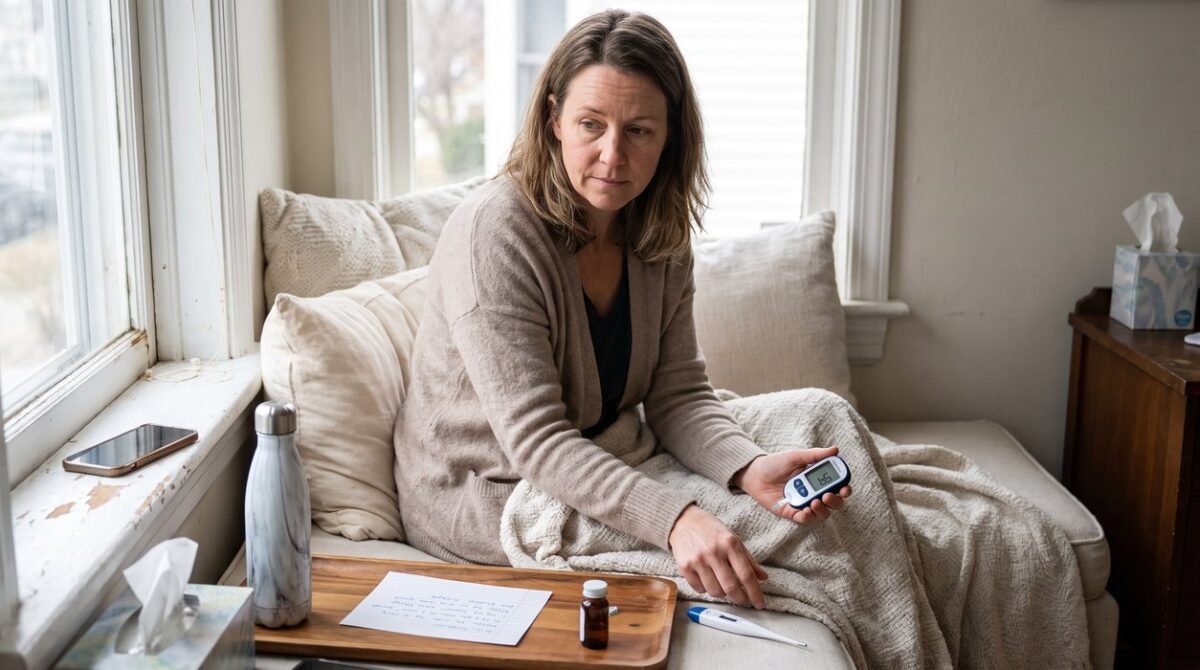
You have barely eaten because of a fever or stomach bug, yet your glucose is higher than usual. That can feel backward, but food is not the only signal controlling blood sugar.
Blood sugar when sick often rises because stress hormones help release stored fuel and can make insulin work less effectively. Dehydration, missed medicines, less activity, and some illness treatments can add to the change.
Key Takeaway: Follow your personal diabetes sick-day plan, monitor more often, stay hydrated, know when to check ketones, and contact your care team early. Do not improvise medication changes from a general article.
Why Blood Sugar When Sick Can Rise
During an infection or other illness, the body releases hormones that help make energy available for the stress response. Those signals can tell the liver to release glucose and can oppose insulin’s effect, pushing glucose higher even when appetite falls.[1], [2]
In someone who uses insulin, illness may change insulin needs. In someone with type 2 diabetes, the combination of stress hormones, dehydration, inactivity, and disrupted medicine or food routines can also move glucose outside the usual range.
Vomiting, diarrhea, and fever can reduce body fluid. With less fluid circulating, glucose may become more concentrated, while dehydration can worsen high-glucose symptoms.
Food intake still matters, but “I did not eat carbs” does not guarantee a normal reading during illness. The liver can supply glucose between meals, and the hormonal response to illness may be stronger than the effect of a smaller meal.
Some medicines used during illness can affect glucose, including steroids, sugar-containing liquids, or changes in diabetes medicines. Ask a pharmacist or clinician about the exact products you use.
A single higher reading may be temporary. Repeated readings, ketones, symptoms, diabetes type, medicines, pregnancy, and your usual targets determine how concerning the situation is.
The same stress biology is explained more broadly in how stress can raise blood sugar. During an acute illness, however, hydration, ketone risk, and access to medical advice become more urgent.
Six Steps for a Safer Diabetes Sick Day
1. Use your personal sick-day plan
A sick-day plan should state how often to check glucose, when to check ketones, which medicines need special instructions, what fluids or carbohydrates to use, and when to call. Create it with your diabetes team before the next illness.
If you do not have one, contact your care team or after-hours service rather than copying another person’s correction dose. Age, pregnancy, kidney function, diabetes type, medicines, and usual treatment all change the advice.
2. Check glucose more often than usual
CDC advises people with diabetes to monitor more often during illness and gives every four hours as general sick-day guidance.[1] Your own plan may call for a different interval, especially with type 1 diabetes, pregnancy, an insulin pump, or rapidly changing values.
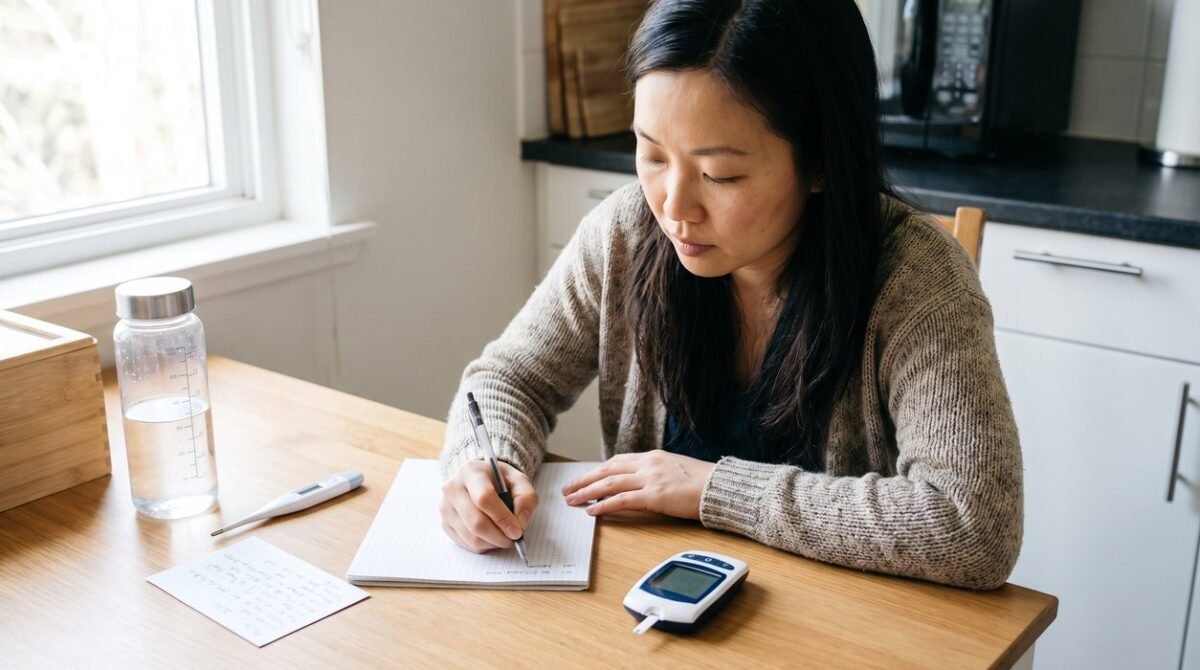
Write down the time, glucose result, ketones if checked, temperature, fluids, food, medicines, vomiting or diarrhea, and symptoms. That record helps a clinician give safer advice than a single number without context.
3. Do not stop insulin on your own
Even when you cannot eat normally, the body may still need insulin because the liver is releasing glucose and ketones can develop when insulin is insufficient. CDC advises continuing insulin and diabetes pills as usual during illness, while individualized plans may contain medicine-specific exceptions.[1]
The safe interpretation is not “never change anything.” It is “do not guess.” Call your clinician or pharmacist for instructions about your actual medicines, particularly with vomiting, dehydration, reduced kidney function, or inability to eat.
Insulin-pump users should know how to check the infusion set, give backup insulin if instructed, and access supplies. Unexplained high glucose with ketones can signal interrupted insulin delivery and needs prompt action.
4. Check ketones when your plan says to
Ketones form when the body cannot use enough glucose because insulin is insufficient and begins breaking down fat rapidly. Excess ketones can lead to diabetic ketoacidosis, or DKA, a medical emergency.[3]
CDC recommends ketone testing when you are sick and glucose is 240 mg/dL or higher.[4] ADA notes that some care teams advise checking at lower values and during illness regardless of glucose, depending on individual risk.[3]
Follow the instructions for your blood or urine ketone product and your care plan. Contact your team for positive or rising ketones as directed; do not exercise to force glucose down when ketones are present and glucose is high.
5. Replace fluids steadily
Use water or another clinician-approved sugar-free fluid when glucose is high and you can drink. If nausea makes a full glass difficult, ADA suggests trying small sips frequently, such as every 15 minutes.[2]
If you cannot eat and glucose is not high, your plan may include carbohydrate-containing fluids or easy-to-digest foods. The right choice depends on glucose, insulin, vomiting, and medical conditions such as kidney or heart failure.
Do not force large volumes if you have a prescribed fluid restriction. Ask your care team what dehydration plan is safe for you.
6. Treat low glucose promptly
Illness can cause high glucose, but eating less while taking insulin or certain medicines can also cause hypoglycemia. CDC defines glucose below 70 mg/dL as low and recommends the 15-15 rule for many conscious adults.[5]
Take 15 grams of fast carbohydrate, wait 15 minutes, and recheck unless your personal plan says otherwise.
Your plan may differ for children, pregnancy, kidney disease, or repeated lows. Severe confusion, seizure, or unconsciousness requires emergency help and prescribed glucagon if available and someone is trained to use it.
One thing worth pushing back on here: “sugar is always the enemy” is dangerous sick-day advice. Fast carbohydrate can be necessary for hypoglycemia, and carbohydrate-containing fluids may help when food is not staying down.
| Track | Why it helps |
|---|---|
| Glucose and time | Shows direction and response, not just one value. |
| Ketone result | Identifies possible insulin deficiency and DKA risk. |
| Fluids and urination | Provides clues about dehydration. |
| Medicines and insulin | Prevents missed or duplicate doses and supports phone advice. |
| Vomiting, diarrhea, fever, breathing, alertness | Highlights symptoms that may change urgency. |
Ketones, DKA, and Why the Number Is Not the Whole Story
DKA is most common in type 1 diabetes but can occur in other situations. Illness, infection, missed insulin, pump interruption, and certain medicines can raise risk.[3]
Possible symptoms include nausea, vomiting, abdominal pain, deep or difficult breathing, fruity-smelling breath, marked thirst, frequent urination, drowsiness, or confusion. Symptoms and ketones can be urgent even when glucose is not extraordinarily high.
Do not wait for a perfect threshold if you feel severely unwell. Use the emergency instructions from your diabetes team and local services.
When to Call or Seek Urgent Care
Contact your diabetes team early for repeated values outside your sick-day range, positive ketones, uncertainty about medicine, ongoing vomiting, or inability to maintain fluids. Early advice can prevent a manageable problem from becoming an emergency.
CDC advises emergency care for trouble breathing, urine ketones, inability to keep liquids down for more than four hours, inability to keep food down for more than 24 hours, glucose below 60 mg/dL, or vomiting or severe diarrhea lasting more than six hours.[1]
CDC also lists a temperature over 101°F for 24 hours and losing five pounds or more during the illness.[1] Your own clinician may give stricter instructions based on age, pregnancy, diabetes type, or other conditions.
Call emergency services for severe breathing difficulty, chest pain, seizure, unconsciousness, new confusion, or inability to care for yourself. Do not drive yourself if low or high glucose or illness impairs your thinking.
Build the kit before you need it
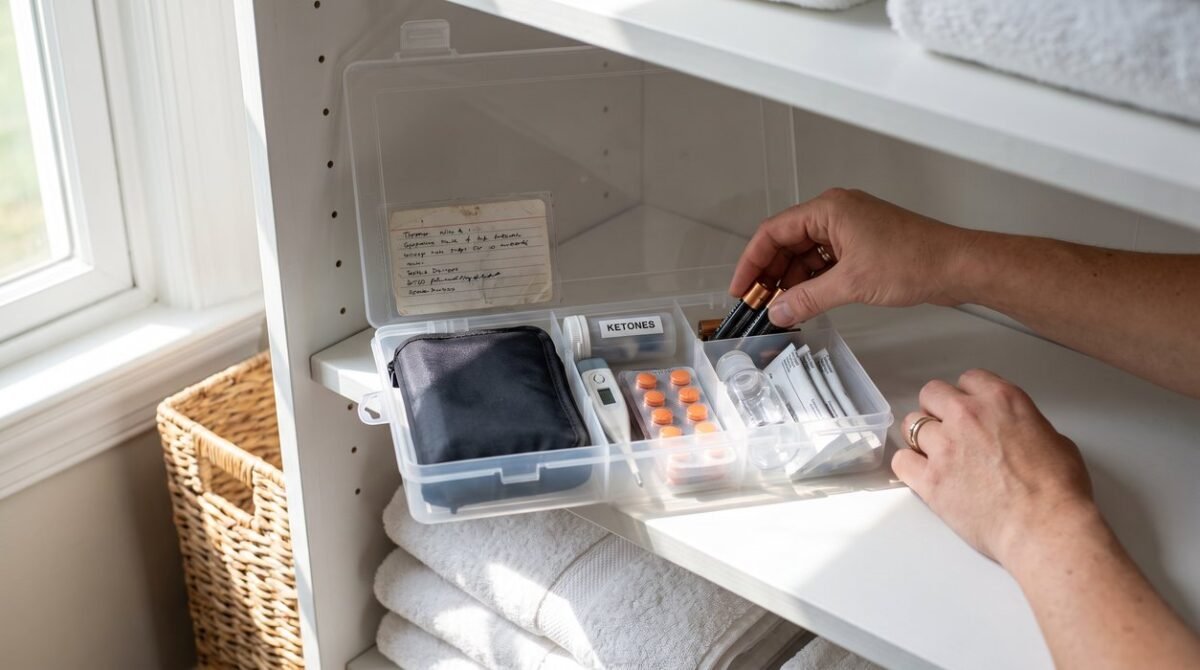
Keep testing supplies, ketone supplies if prescribed, a thermometer, fast carbohydrate, hydration options, medicine information, and contact numbers together. Check expiration dates and replace used items during an ordinary week, not during a fever.
MedlinePlus also recommends planning with your provider for how illness may change monitoring and what to do when glucose rises.[6] Share the plan with someone who may help you when you are too unwell to manage details.
If you live alone, decide whom you will contact and how they can access your home in an emergency. Keep phone chargers and backup meter batteries available, and store insulin according to product instructions.
What If You Do Not Have Diagnosed Diabetes?
Illness can temporarily raise glucose in people without known diabetes, especially during severe infection, hospitalization, steroid treatment, or significant physical stress. A home meter result is not enough to diagnose diabetes.
Contact a clinician for repeated unexpected highs, marked thirst, frequent urination, unexplained weight loss, blurred vision, or slow recovery. They can decide whether testing after the acute illness is appropriate.
Do not borrow insulin or diabetes medicine. If you use a glucose sensor without diabetes, remember that readings can lag or be inaccurate; confirm concerning results using appropriate clinical advice.
For more context on why identical inputs can produce different readings, see why the same meal can produce a different glucose response.
Frequently Asked Questions
Why is my blood sugar high when I am not eating?
Illness hormones can signal the liver to release glucose and make insulin less effective. Dehydration, inactivity, medicines, and insufficient insulin may add to the rise.[1], [2]
How often should I check blood sugar when sick?
CDC gives every four hours as general guidance, but your diabetes plan may require more or less frequent checks.[1] Follow your clinician’s instructions.
When should I check ketones?
CDC recommends checking during illness when glucose is at least 240 mg/dL, while some individual plans use lower thresholds or advise checking whenever you feel sick.[3], [4]
Should I skip insulin if I cannot eat?
Do not stop insulin on your own. Illness can increase insulin needs even with reduced food, while some doses may need individualized adjustment; contact your care team.
Conclusion
Blood sugar when sick can rise because illness changes hormones, insulin action, hydration, activity, and routine. The safest response is a prepared plan—not chasing one number with improvised insulin, fasting, or exercise.
Keep monitoring supplies, ketone strips if prescribed, fluids, medicine information, and contact numbers together. Call early when values or symptoms move outside your plan, and use emergency care for the warning signs above.
Medical Disclaimer: This article is for general educational purposes only and is not a substitute for personalized medical advice, diagnosis, or treatment. Speak with a qualified healthcare professional if you have symptoms, take medication, are pregnant or breastfeeding, or are considering major changes to your diet, supplements, or treatment plan.
References
- Centers for Disease Control and Prevention. Managing Sick Days. Updated May 15, 2024. CDC sick-day guidance
- American Diabetes Association. Diabetes and Planning for Sick Days. ADA sick-day guidance
- American Diabetes Association. Managing Ketones with Diabetes. ADA ketone guidance
- Centers for Disease Control and Prevention. Manage Blood Sugar. Updated May 14, 2024. CDC blood glucose guidance
- Centers for Disease Control and Prevention. Treatment of Low Blood Sugar (Hypoglycemia). Updated May 15, 2024. CDC hypoglycemia guidance
- MedlinePlus. Diabetes—when you are sick. MedlinePlus patient guidance